Coffee Calories: What’s Really in Your Cup?
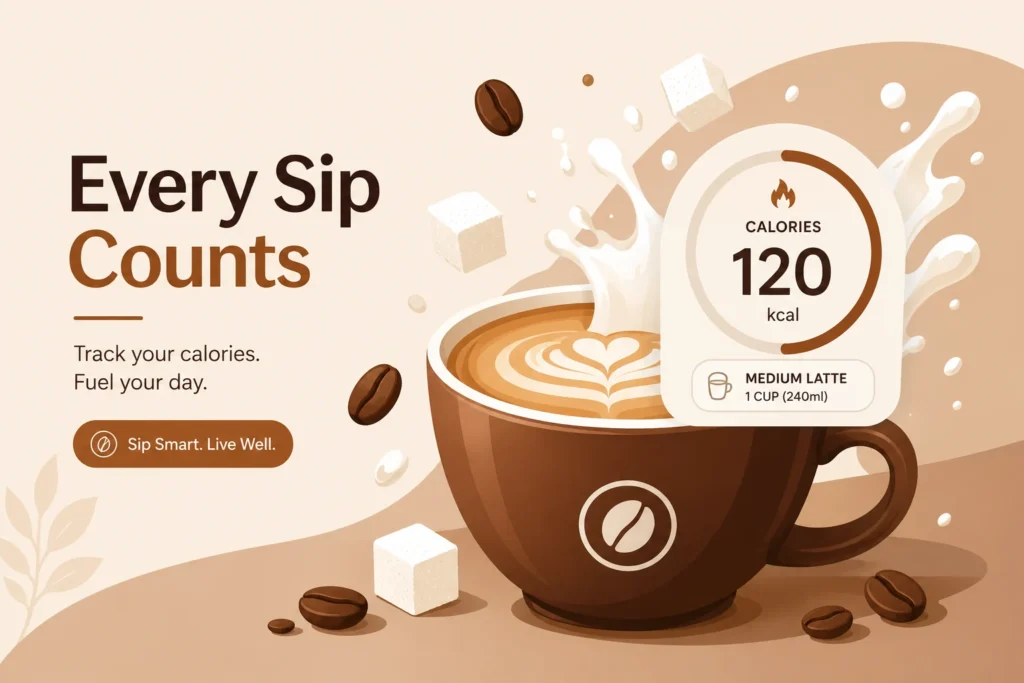
If you’re someone who can’t function without that first sip of coffee in the morning, you’ve probably wondered at some point: how many calories am I actually drinking? The honest answer is it depends a lot on how you take it. A plain black coffee barely registers on the calorie scale, but the moment you start adding milk, sugar, syrups, or whipped cream, those numbers can climb fast.
This guide breaks down coffee calories across the most popular drinks, explains where those extra calories actually come from, and shares a few simple swaps that can help you enjoy your coffee without the calorie guilt.
Why Coffee Calories Matter
Here’s a number that tends to stop people mid-sip: a Starbucks Venti Caffè Mocha clocks in at around 450 calories that’s more than a McDonald’s Cheeseburger, which sits at 300. Same category of “quick treat,” very different calorie bill.
Coffee on its own is one of the lowest-calorie drinks you can have. The catch is that most of us don’t drink it black. Between flavored syrups, whole milk, whipped cream, and sugar, a “harmless” coffee order can quietly turn into a 400-calorie drink roughly the same as a slice of cake.
If you’re watching your weight, managing blood sugar, or just trying to be more mindful about what you consume, knowing where coffee calories come from makes it a lot easier to enjoy your coffee habit without derailing your goals.
Calories in Coffee: The Full Breakdown
Here’s a quick look at how popular coffee drinks compare, based on a standard serving size:
| Coffee Type | Serving Size | Calories (approx.) |
| Black Coffee (no sugar/milk) | 240 ml (1 cup) | 2–5 |
| Espresso | 30 ml (1 shot) | 1–3 |
| Americano | 240 ml | 5–15 |
| Cappuccino (whole milk) | 240 ml | 70–120 |
| Latte (whole milk) | 350 ml | 150–220 |
| Mocha (whole milk + chocolate) | 350 ml | 250–350 |
| Cold Brew (black) | 350 ml | 5–10 |
| Iced Coffee (with milk) | 350 ml | 60–100 |
| Frappuccino (blended, sweetened) | 350 ml | 250–450 |
| Instant Coffee (black) | 240 ml | 5–10 |
A couple of patterns jump out right away. First, anything served black — espresso, Americano, cold brew, plain instant coffee stays under 15 calories no matter the size. Second, the calorie count climbs almost in direct proportion to how much milk, cream, and sugar gets added. A mocha isn’t really “coffee with extra calories” so much as it’s a chocolate milkshake with a coffee kick.
Black Coffee Calories
Black coffee is one of the lowest-calorie beverages you can drink. A standard 8 oz (240 ml) cup contains just 2–5 calories, with virtually no fat, carbs, or protein. Since it contains no milk, sugar, or cream, black coffee is an excellent choice for weight loss, intermittent fasting, and low-carb diets.
Adding sugar, cream, or flavored syrups is what increases the calorie count—not the coffee itself.
Latte Calories
A latte contains significantly more calories than black coffee because it is made with steamed milk. A Grande latte prepared with 2% milk contains around 190 calories, while whole milk increases the calorie count even further.
Choosing skim or almond milk can reduce the calories without changing the coffee flavor too much.
Cappuccino Calories
A cappuccino contains less milk than a latte, making it a lower-calorie option. A typical medium cappuccino contains 70–140 calories, depending on the milk used.
If you want a creamy coffee with fewer calories, a cappuccino is often a better choice than a latte.
Iced Coffee Calories
Plain iced coffee is naturally low in calories, usually containing 5–10 calories. However, adding milk, flavored syrups, sweet cream, or whipped topping can quickly increase the total to 100 calories or more.
Ordering unsweetened iced coffee with a splash of almond milk is one of the lowest-calorie options available.
Coffee Calories Comparison Table
| Coffee Drink | Calories | Best For |
|---|---|---|
| Black Coffee | 2–5 | Lowest calories |
| Espresso | 1–3 | Quick caffeine |
| Americano | 5–15 | Low-calorie coffee |
| Cold Brew | 5–10 | Smooth flavor |
| Cappuccino | 70–140 | Balanced option |
| Iced Coffee | 60–100 | Refreshing choice |
| Latte | 150–220 | More protein |
| Mocha | 250–350 | Sweet coffee |
| Frappuccino | 250–450 | Dessert-style drink |
Where Do Coffee Calories Actually Come From?
It’s rarely the coffee itself. Here’s the real breakdown:
Milk and cream. A splash of whole milk adds roughly 10–20 calories per tablespoon, and heavy cream is even higher. Switch to a full cup of whole milk in a latte, and you’re already looking at 100+ calories before anything else gets added.
Sugar. One teaspoon of sugar adds about 16 calories. That sounds small, but most flavored coffee drinks use several teaspoons’ worth of sugar or syrup combined.
Flavored syrups. Vanilla, caramel, and hazelnut syrups typically add 50–100 calories per pump — and many coffee shop drinks use two or three pumps by default.
Toppings. Whipped cream, chocolate drizzle, and caramel sauce on top of a drink can tack on another 50–150 calories, almost like dessert disguised as coffee.
Plant-based milk choice. If you’ve switched to almond, oat, or soy milk in your coffee, the type you pick still matters. Unsweetened almond milk is the lightest option at around 30–40 calories per cup, soy milk sits in the middle at roughly 80–100 calories per cup, and oat milk runs the highest among the three at about 90–120 calories per cup (mostly due to its natural sugars and creamier texture). So if you’re aiming for the lowest-calorie cup, almond milk is the better swap — oat milk wins on creaminess but costs you a bit more in calories.
So the coffee bean itself is basically calorie-free. Everything else is where the math changes.
Low-Calorie Coffee Tips
If you love your coffee but want to keep the calories in check, a few small changes go a long way:
Start with black coffee or espresso as your base — it’s naturally low-calorie and still gives you that caffeine boost.
Swap whole milk for skim or unsweetened almond milk. You’ll barely notice the taste difference, but it cuts a noticeable chunk of calories.
Cut back on sugar gradually, or use a low-calorie sweetener like stevia if you need that sweetness.
Watch your cup size. A “tall” coffee and a “venti” can differ by over 100 calories just based on volume.
Skip the whipped cream and syrup pumps, or ask for half the usual amount — most coffee shops are happy to adjust.
None of these require giving up coffee altogether. It’s really just about being intentional with the extras.
Best Low-Calorie Coffee Choices
If weight management is your main goal, a few drinks consistently come out on top:
- Black coffee — virtually calorie-free and rich in antioxidants.
- Americano — espresso diluted with hot water, full flavor, minimal calories.
- Cold brew (unsweetened) — smooth, low-acid, and still under 10 calories.
- Espresso shots — concentrated flavor without the volume or the add-ins.
These options let you keep your coffee ritual intact while keeping your calorie intake close to zero.
Final Thoughts
Coffee itself isn’t the calorie culprit it’s almost always what gets added to it. Once you know that a plain black coffee sits at just a few calories, while a sweetened, milk-heavy specialty drink can easily cross 300–400 calories, you’re in a much better position to make choices that fit your goals. Next time you’re ordering, take a second look at the size, the milk, and the extras that’s where the real difference is made.
Does black coffee have zero calories?
Not exactly zero, but close a typical cup has only 2–5 calories, which is low enough that most nutrition guides round it down to “negligible.”
Does cold brew have fewer calories than regular coffee?
On its own, cold brew and regular black coffee have similarly low calories. The difference usually comes from what’s added — cold brew is often served with less milk and sugar by habit, which is why it tends to come out lower in practice.
Is a latte healthier than a cappuccino?
A cappuccino generally has fewer calories than a latte of the same size, since lattes use more steamed milk. Both can be made lighter with skim milk.
Does sugar-free syrup remove all the calories?
Sugar-free syrups cut most of the calories from sweeteners, but the drink will still carry calories from any milk or cream used alongside it.